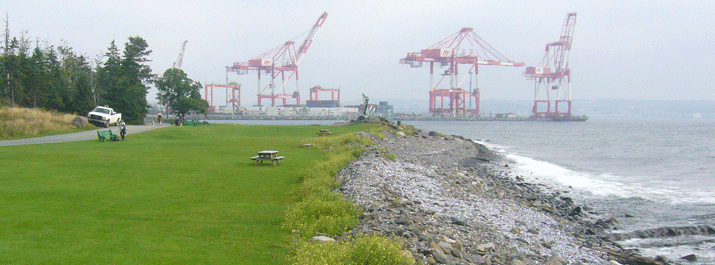
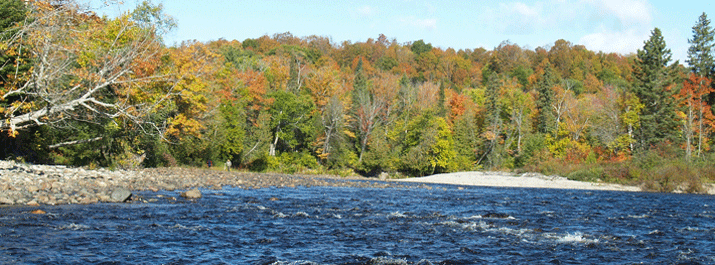
The Coldwater team has been involved in a wide range of studies throughout the Great Lakes - St. Lawrence River system. Geographically, our experience ranges from the wave and storm surge dominated environment of the Gulf of St. Lawrence through the St. Lawrence estuary, the river and the St. Lawrence Seaway system up to Lake Superior.
| Accounting for one-fifth of the world's fresh water, the Great Lakes Basin and the St. Lawrence River constitute one of the world's most important natural resources. This watershed provides drinking water, recreational areas, water for industry, hydro-electric power and transportation for the 33 million people living within its drainage basin. Equally vital, the region consists of a vast network of interdependent ecosystems comprising flora, fauna and people. These waters have provided an essential transportation corridor throughout history. The evolution of both Canada and the United States (US) is reflected in the development of the navigational waterways running through this watershed. Today's Great Lakes St. Lawrence Seaway (GLSLS) system is the culmination of centuries of steady improvement, the result of which is a deep-draft navigable waterway running from Lake Superior through Lake Ontario and the St. Lawrence River to the Atlantic Ocean. The eight states and two provinces that border on this waterway have a combined population of more than 100 million and form one of the largest integrated industrial regions in the world. The GLSLS was developed to support and strengthen regional, continental and intercontinental economic relationships by providing a low-cost transportation corridor. |